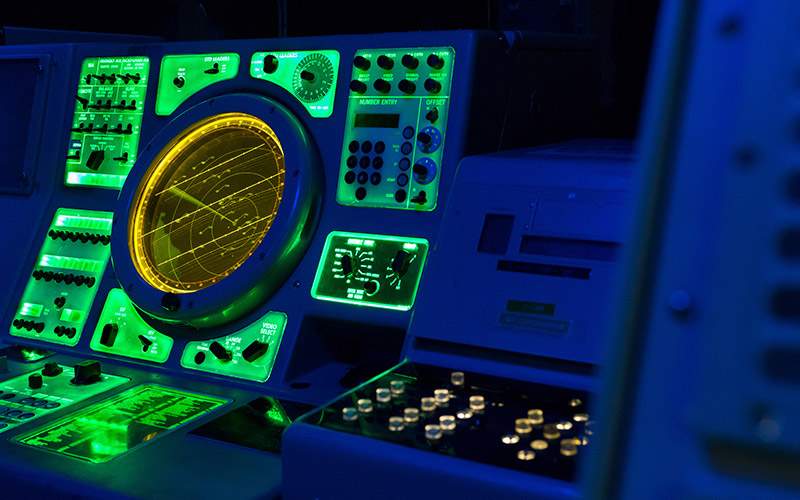
In environments where technology safeguards lives, assets or missions, flawless performance is non-negotiable. Whether it’s a spacecraft bound for deep space, a defense radar system or a life-sustaining medical device, commercial-grade electronics can’t meet the stringent reliability and endurance requirements.
That’s where high-reliability (Hi-Rel) design comes into play. In high-reliability design, every resistor, capacitor, inductor or solder joint becomes a mission-critical decision. Passive components designed for Hi-Rel applications are engineered to withstand the most demanding conditions – extreme temperature, vibration, radiation and years of continuous operation –without performance drift or failure.
Hi-Rel components undergo rigorous screening and testing, including burn-in, thermal cycling and mechanical stress tests. This significantly reduces the risks of random failures while improving system integrity and endurance.
Hi-Rel Design: More Than Just Rugged Parts
Applications for Hi-Rel electronics can range from ground-based military support and test systems to satellites and deep-space missions. When designing these systems, engineers must consider far more than simply choosing rugged parts. A disciplined engineering approach that considers environmental stress, electrical performance and manufacturability from the very beginning is critical.
The components you select must be rated for their exact environmental and electrical stress conditions. It is also essential to explore ways to integrate the passive components to minimize interconnections and parasitic effects.
Military and aerospace standards such as MIL-PRF, MIL-STD-202 and MIL-STD-348 enforce stringent manufacturing and testing controls. Designing in compliance with these standards provides the guardrails to ensure system reliability and performance in the long haul.
Selecting and Integrating Passive Components
Component integrity is the foundational step for system reliability. The quality, stability and construction of each passive component directly impact overall system performance. Every category – capacitors, resistors, inductors and integrated passives – brings its own design and reliability considerations.
Capacitors
Multilayer ceramic capacitors (MLCCs) remain a cornerstone of Hi-Rel design thanks to their low ESR (equivalent series resistance), thermal stability and long-term performance. For high-voltage or high-temperature circuits, plastic film capacitors with self-healing properties deliver superior endurance and predictable aging behavior.
Resistors
Precision resistors with low temperature coefficients and verified stress stability ensure accurate biasing and voltage division – key requirements in analog, sensing and power-management circuits. Using components with proven thermal stability helps minimize drift and maintain circuit integrity over time.
Inductors
In Hi-Rel applications, inductors must resist both mechanical and thermal stress. Selecting components with robust cores, mechanically secure terminations and sealed enclosures enhances long-term reliability, especially in high-vibration environments such as defense and aerospace platforms.
Hi-Rel Connectors
Military grade connectors are essential for mission-critical systems such as aircraft, naval equipment, ground combat vehicles and soldier-worn electronics. These connectors are designed to withstand harsh conditions like shock, vibration, temperature extremes, moisture and electromagnetic interference.
Integrated Passive Devices (IPDs)
IPDs combine multiple passive components into a single package, streamlining the design while improving performance. By reducing solder joints and minimizing parasitic elements, IPDs enhance signal integrity and eliminate potential failure points – an increasingly valuable advantage in compact, high-density assemblies.
Design and Manufacturing for Reliability
Even the most robust components can fail if not properly integrated into the design.
Some essential design considerations for high reliability include the following:
- Minimize Interconnections: Every solder joint represents a potential failure point. Using IPDs and simplified layouts helps reduce interconnections and improve long-term reliability.
- Account for the Operating Environment: Incorporate thermal, shock and vibration analysis early in the design cycle. Simulation and modeling tools can predict stress points and guide component placement.
- Follow Proven Standards: Specify components qualified to MIL-PRF, ESCC or other established Hi-Rel standards to ensure consistent performance across production batches.
- Validate, Ensuring Traceability: High-reliability systems demand evidence of performance, not just assumptions. Comprehensive testing and documentation help validate component behavior and maintain confidence in the final design. Environmental and stress testing subject assemblies to vibration, thermal cycling, and humidity testing to uncover potential weaknesses. Quality assurance ensures strict process control from incoming inspection to final test to ensure uniform performance.
For quick isolation and lifecycle monitoring, it's helpful to keep a complete record of each component’s origin, batch and qualification data. These practices align with aerospace and defense traceability requirements – where every component must have a clear, documented history.
Durability and Lifecycle Management
Mission durations in aerospace, defense and security can span decades. Maintaining performance over such lifespans requires both reliable design, supply continuity and proactive lifecycle management.
Advanced component preparation and refurbishment processes can help extend service life and improve supply resilience:
- Chip Recovery and Reuse: Analyzing failed components reveals root causes, enabling design improvements and potential reuse of salvageable parts
- Laser Reballing and Retinning: Reapplying solder (lead or lead-free) to component leads or BGA (ball grid array) spheres restores solderability, reduces tin whisker formation and improves long-term interconnect integrity.
By integrating lifecycle management into the design and manufacturing strategy, engineers can achieve military-grade durability while managing costs and availability constraints.
Balancing Reliability, Availability and Cost
In Hi-Rel design, reliability doesn’t exist in isolation – it must be balanced against availability and cost. As qualification levels increase, available options often narrow, lead times lengthen and unit prices rise. Engineers must anticipate these trade-offs early in the design process to avoid bottlenecks during production.
Compounding the challenge, some suppliers use vague or misleading marketing language to imply a higher level of reliability than they are actually qualified for, charging a premium for what is, in fact, a commercial-grade product. Partnering with experienced distributors and manufacturers is essential to verify qualification status, manage documentation and maintain transparency throughout the supply chain.
Conclusion
For design engineers working in mission-critical sectors, Hi-Rel passive components are not an upgrade – they’re a necessity. The right components, properly tested and qualified, form the backbone of dependable system performance.
By adhering to high-reliability standards, implementing rigorous testing and partnering with experienced suppliers, engineers can build systems that endure, protecting performance, budgets and reputations alike.
Hi-Rel components from global distributors like TTI help enhance durability, mitigate counterfeit risk, shorten lead times and maintain consistent reliability throughout the supply chain.
Sravani Bhattacharjee has worked as a tech leader at Cisco, Honeywell and other companies where she delivered many successful innovations to the market. As the principal of Irecamedia, she collaborates with Industrial IoT innovators to create compelling vision, strategy and content that drives awareness and business decisions.
Follow TTI, Inc. on LinkedIn for more news and market insights.
Statements of fact and opinions expressed in posts by contributors are the responsibility of the authors alone and do not imply an opinion of the officers or the representatives of TTI, Inc. or the TTI Family of Specialists.
Follow TTI, Inc. - Europe on LinkedIn for more news and market insights.
Statements of fact and opinions expressed in posts by contributors are the responsibility of the authors alone and do not imply an opinion of the officers or the representatives of TTI, Inc. or the TTI Family of Specialists.