Optoelectronics Resource Overview
Overview of Optoelectronics
Optoelectronic technology is being integrated into many major equipment and product manufacturers’ latest designs, enhancing their designs’ range of capabilities in efficiency and performance. At the component level, these new products must deliver higher performance and reliability than existing technology for highly-engineered solutions. As the technology continues to develop and new products are released into the market there is ever increasing demand for these products. More LEDs, LASERs, displays and infrared sensors are being incorporated into unique applications. Key market segments that are driving the demand are general lighting, industrial, medical, transportation/EV, and harsh environment, military and aerospace. These optoelectronic components range from LEDs used for indication and illumination, high power devices for street and area lighting, specialty wavelengths for horticulture, retail lighting, infrared technology for sensing and security, LASERS in range detection, UV-C for germicidal applications and OLED displays.
TTI offers a broad selection of Optoelectronic components and displays from the industry’s leading suppliers.
General Lighting
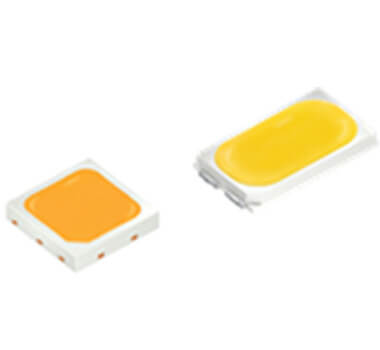
Nearly all new indoor, outdoor and specialty lighting designs are migrating to LED technology. Driven by energy efficiency, color temperature control and long life, LEDs are the go-to technology for lighting fixture designers. New LED packages are designed to meet the specialty lighting requirements for intensity, color control and color rendering (CRI). Manufacturers are continuously developing products to address the high power, mid power and low power LED applications.
Industrial
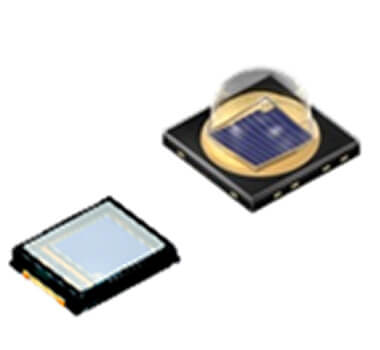
Industry 4.0 is the latest trend of automation and data exchange in manufacturing technologies. It includes cyber-physical systems, the Internet of things, cloud computing and cognitive computing. Driven by breakthroughs in artificial intelligence, robotics, and similar technologies. Infrared LEDs, sensors, cameras, and LASERs have been an enabling technology in the implementation of factory and process automation.
Medical

Medical equipment manufacturers are integrating more LEDs, infrared sensors, UV-C LEDs and displays into their newest designs, expanding these devices’ effectiveness in medical treatment. Devices such as pulse oximeters utilize an LED and photo sensors to calculate blood oxygen levels based on analyzing the properties of light. Additionally, biomedical spectroscopy aids in tissue analysis and medical imaging. The integration of unique wavelengths in infrared (IR) and ultraviolet (UV) provides added capabilities to analyze blood, urine and other bodily fluids for diagnostic purposes.
Transportation
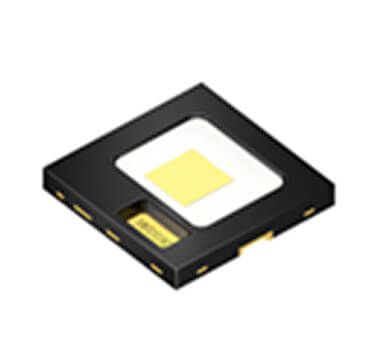
A variety of LEDs, sensors, displays, and LASERS are embedded in transportation and automotive systems. These include interior and exterior lighting, safety systems, Lidar systems and infotainment. Interior lighting can now be color controlled by the driver to any color that suits their palette. LEDs provide energy-efficient, powerful solutions for exterior LED headlamp assemblies combining numerous high-brightness LED components that run cooler and last longer than incandescent headlamp bulbs. LASERs aid in autonomous driving systems to detect moving objects with a 360-degree view.
Harsh Environment/Military/Aerospace Applications

New production processes and materials allow optoelectronic components to be rated at much higher temperatures than ever before. These devices must be able to operate in harsh environments and be able to withstand extreme temperature, humidity, dust, electromagnetic interference, marine environments, radiation and more. More applications are being developed for down hole drilling in Oil and Gas, commercial Off-the-Shelf (COTS), MIL-spec, and Space grade products. Special certifications such as QML and QPL for JAN/JANTX level, Nadcap, IPC-A-610D, J-STD-00.


Featured Suppliers


