Harwin Sycamore Contacts are single-piece, low-profile SMT socket contacts designed for direct PCB mounting. These contacts feature three contact points for reliable signal continuity and use a balanced two-terminal design without an outer shell. The Sycamore contacts are built using beryllium copper with gold plating and can withstand up to 500 mating cycles. These contacts are useful for field replaceable modules, odd-form terminations, and sensor applications like gas detectors, fire alarms, and metering systems.
Harwin Sycamore Contacts
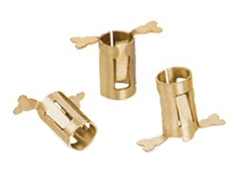
Features
- -50°C to +125°C operating temperature range
- Built using beryllium copper with gold plating
- Compatible with standard SMT pick-and-place machines
- Low-profile surface-mount design
- Three contact points for increased reliability
Applications
- Fire and security
- Gas detection
- Handheld equipment
- Home automation
- Modular systems
Video
This TTI Tech Specs video explains that the Harwin Sycamore Contacts are surface mount, with the socket sticking through a hole in the PCB, and they have three points of contact.
See video transcript below
Video Transcript
Ever tried to put a square peg in a round hole? Didn’t think so. And not all components can plug into a regularly-spaced socket. Enter Harwin SYCAMORE Contacts, a single piece, beryllium copper contact that can be used for signal or power with all those odd-form components. Variants of the contact allow for top or bottom entry of the pins, with sockets to fit pins from 0.8 to 1.9 mm, and the open design accommodates extra long pins. The contacts are surface mount, with the socket sticking through a hole in the PCB, and they have three points of contact.
I don’t have time to go through all the math right now, but that’s 50% more contact points than traditional sockets with two points of contact, and that improves contact reliability. SYCAMORE Contacts are perfect for plug-in sensors used in fire, security, gas detection, home automation, and other devices where you need components to be easily replaceable, or with components that can’t tolerate exposure to high temperatures, and they’re compatible with automated assembly.