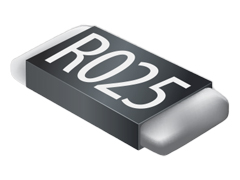
Bourns CRF High-Power Current Sense Resistors
Bourns CRF Series High-Power Current Sense Resistors offer inductance less than 5nH and provide resistance value as low as 0.001Ω. These high-power CRF resistors operate at a temperature range from -55°C to +170°C with (P x R)1/2 maximum working voltage. These resistors support low-temperature storage at -55˚C for 1000 hours and high-temperature exposure for 1000 hours at +170˚C. The CRF current sense resistors are RoHS and AEC-Q200 compliant. Typical applications include power supplies, stepper motor drives, and input amplifiers.
Features
- AEC-Q200 compliant
- High power density
- Inductance less than 5nH
- Low thermal EMF:
- <3µV/°C (CRF0805 and CRF1206)
- <40µV/°C (CRF2512)
- RoHS-compliant
Applications
- Input amplifiers
- Power supplies
- Stepper motor drives
Technical Specifications
| Parameters | Values |
|---|---|
| Operating temperature range | -55°C to +170°C |
| Resistance tolerance | ±1% to ±5% |
| Minimum resistance | 0.001Ω |
| Temperature coefficient | ±50 PPM/°C |
| Vibration | 10KHz to 2000KHz |
CRF High-Power Current Sense Resistors Soldering Profile Image
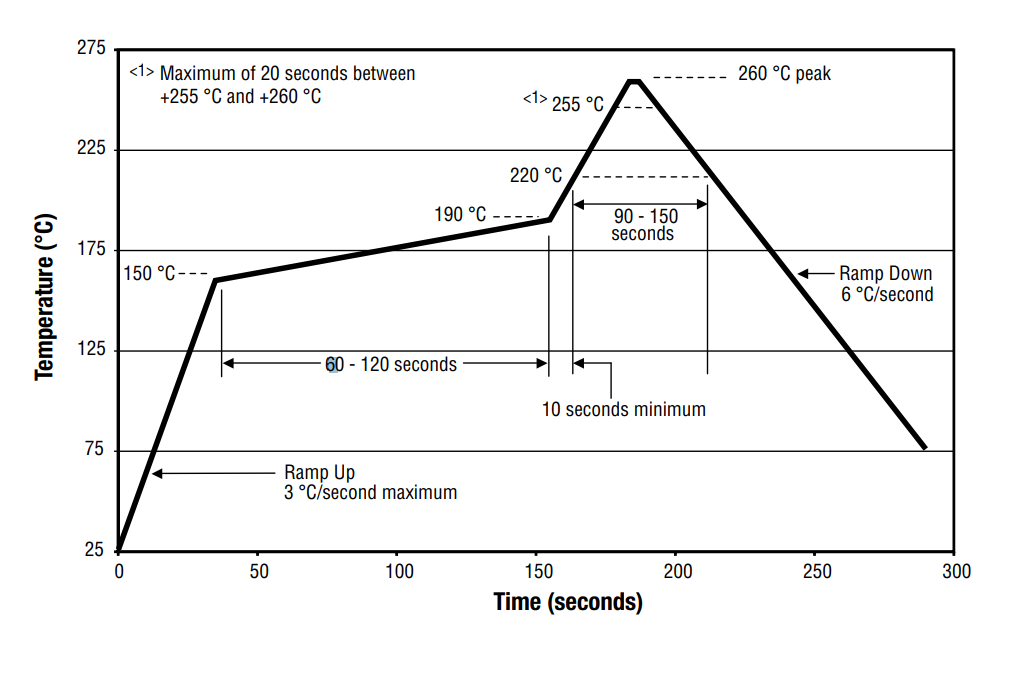 CRF High-Power Current Sense Resistors Soldering Profile Image
Video
This video explains the Bourns CRF Series High-Power Current Sense Resistors offer inductance less than 5nH and provide resistance value as low as 0.001Ω.
See video transcript below
Video Transcript
I've got to be honest, I don't know the real meaning behind the letters CRF in this series of current sense resistors from Bourns, and rather than asking, I just decided on my own that it means Chip Resistor Feature-palooza, because that's a lot shorter than going through all of the features and the benefits like I'm about to do. They're high power with ratings from 0.5W to 2W and low ohmic with values as low as 1mΩ. The 0805, 1206, and 2512 case sizes provide high power density, and their low 50ppm TCR and low thermal EMF make them ideal for applications where accuracy is critical. Additionally, their low inductance value of less than five nanohenries enables them to work with rapidly changing voltages while maintaining control loop stability. They're also a AEC-Q200 compliant for use in automotive environments and can operate from -55°C to +170°C, making them useful in nearly any environment, especially for current sensing in power supplies, stepper motor drives, and input amplifiers.