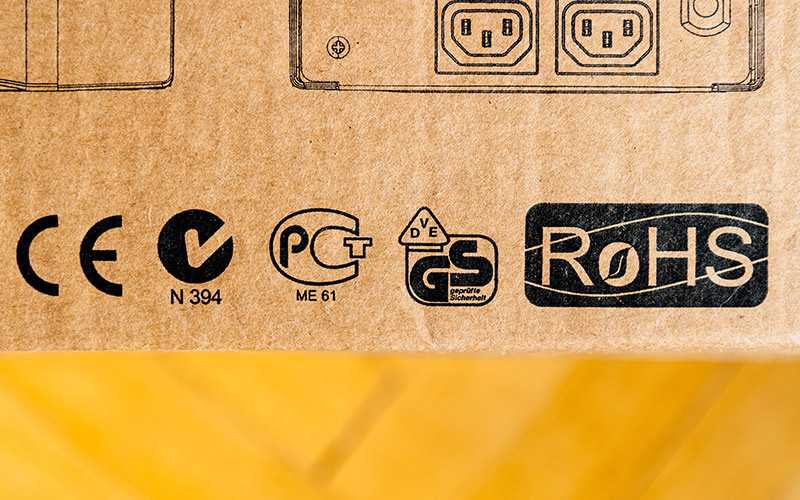
Since the very first regulation (nearly 22 years ago) that forced electronics manufacturers to start to think about the substances that their products are comprised of, the European Union Restriction of Hazardous Substances (EU RoHS) Directive certainly deserves a place in the historical documentation of the industry. And after 22 years, it’s pretty clear that the Directive - having survived, expanded and been more or less replicated in many markets around the world – has been extraordinarily effective in reducing the use of ten hazardous substances in electrical and electronic equipment.
As I pointed out in my previous column, the widely used Pack 22 exemptions (including the 6-, 7(a)- and 7(c)-series) that were destined to be implemented almost precisely as the consultants had recommended, have now come into force via a series of three Delegated Directives: 2025/2364, 2025/1802 and 2025/2363, respectively. This action generally bifurcates these exemptions into still narrower subsets of the existing exemptions.
This is nothing new. RoHS has operated this way since 2010. For example, exemption 6 was a single entry for lead in steel, aluminum and copper alloys in the original RoHS, 2002/95/EU, until it was amended and broken out into the three 6-series exemptions – 6(a), 6(b) and 6(c) – for lead in steel, aluminum and copper alloys by Commission Decision 2010/571/EU. That Commission Decision replaced the Exemption Annex in its entirety to enable application of expiration dates and otherwise begin the drive to narrow the scope of exemptions.
These new Delegated Directives extend, once again, the trend of splitting and narrowing the scope of the existing exemptions:
- 6(a)-I splits into two exemptions.
- The 6(b)-series drops from three to two exemptions for most products and 6(b)-I expires on Dec. 11, 2026, with no possibility of renewal for categories one through seven and 10. The scope of the exemptions is also narrowed and 6(b)-III reduces the amount of lead allowed
- 6(c) remains the same.
- 7(a) splits into 8 exemptions, which will need extensive documentation (i.e., an exemption “FAQ”) to enable manufacturers to determine which exemption(s) apply to their products.
- 7(c), for which only two exemptions remained in force, -I and -II, gets two more: -V and -VI. These additional exemptions detail specific applications for lead in glass and lead in ceramic, respectively. 7(c)-V certainly appears to overlap with the existing -I and -II exemption, so its purpose is unclear to me.
Manufacturers are advised to read the relevant sections of the Pack 22 final report to understand these often unclear and, in at least one case, incorrectly transposed (7(c)-V: “1013,3 dPas” is listed in the Directive as “1 013,3 dPas”), entries.
RoHS Article 5 is written to continuously drive for the elimination of exemptions. Article 6 enables the European Commission to add restricted substances to Annex II, but since the addition of four phthalates a decade ago, no more substances have been added. The Commission has, instead, continued to implement Article 5 (very poorly, in my opinion, taking far longer than necessary to review and implement changes – this is another whole topic we don’t have room to discuss here), driving down the minimal amounts of lead remaining in electrical and electronic equipment (EEE) without consideration, it seems, of cost, effectiveness or return on investment (ROI).
These changes are not free. They cost the supply chain and manufacturer significant amounts of time, human resources and financial resources for inconsequential returns (in my humble opinion, a formal, funded study would be necessary to quantify this). The consultants even say, in the Pack 22 final report, “An application-specific assessment would allow a stronger focus on each of the applications and its specific obstacles to substitution.” Indeed, it would! This demonstrates the implicit drive to continue to drill down into the precise applications of exemptions ad nauseam. Yet the report also details just how challenging that is (not the least of which are those applications which have not yet been invented).
The problem here is that there is no point where Article 5 says “enough,” zero molecules of each hazardous substance is the goal. While that’s an honorable and righteous goal, it’s ultimately impractical and unachievable in any reasonable timeframe. RoHS has no requirement for anything like a pareto analysis, a standard quality-driven approach used in industry to help determine, given numerous issues, which issue(s) to address to, in this case, achieve the greatest impact. Without intervention, RoHS just digs deeper into every hole regardless of impact because it has to meet the ultimate goal.
Given the failure to add new substances to RoHS – and instead letting the Stockholm Convention (MCCPs and Dechlorane Plus) and REACH (“Regulatory strategy for flame retardants” and “One Substance, One Assessment”) address important hazardous substances used in EEE, I believe that there are two possible approaches for the future. RoHS must either be:
- Recast in some manner that will make it more effective and enable a focus on additional substances that are unique to EEE and would not rationally be addressed by either the Stockholm Convention or REACH (or some other EU instrument). The question that must be asked here is whether there are enough substances that meet this requirement for it to make sense. The concept of a pareto analysis should be included in any such recast.
- Put out of our misery and included in the scope of REACH Annex XVII, where exemptions can continue to exist but are not subject to a single-mindedly aggressive drive to elimination.
What do you think?
Quick Takes
China: Not only has the Ministry of Industry and Information Technology (MIIT) implemented the new mandatory standard for China RoHS, GB 26572-2025, but the next set of products that will be entered into the “catalogue” and subject to substance restrictions, along with the attendant list of exemptions, was recently issued in draft form. MIIT posted the drafts for a 30-day comment period on November 3, 2025.
The new list includes cameras, "smart speakers," servers (including commercial data center servers), networking devices (again, including commercial data center switches) and medical devices, including blood glucose meters and hearing aids. The implementation date is proposed to be August 1, 2027. Minor updates are being proposed for some of the products in the current catalogue as well.
U.S.: The Environmental Protection Agency (EPA) proposed some industry-friendly updates to the PFAS Data Call regulation in November. These include proposals for a de minimis level as well as excluding imported articles from the scope of the data call. The proposal is open to comments through December 29. The proposed rule can be read and commented on here.
European Union: On November 5, another commonly used flame retardant was added to the candidate list of SVHCs, seemingly off-schedule. Decabromodiphenyl ethane (DBDPE), a common replacement for RoHS-restricted substance decabromodiphenyl ether (DecaBDE), now must be disclosed per REACH Article 33 requirements to downstream customers.
Visit DCA at www.DesignChainAssociates.com or email the author with any questions or comments on this post.
Statements of fact and opinions expressed in posts by contributors are the responsibility of the authors alone and do not imply an opinion of the officers or the representatives of TTI, Inc. or the TTI Family of Companies.
Follow TTI, Inc. on LinkedIn for more news and market insights.
Statements of fact and opinions expressed in posts by contributors are the responsibility of the authors alone and do not imply an opinion of the officers or the representatives of TTI, Inc. or the TTI Family of Specialists.
Follow TTI, Inc. - Europe on LinkedIn for more news and market insights.
Statements of fact and opinions expressed in posts by contributors are the responsibility of the authors alone and do not imply an opinion of the officers or the representatives of TTI, Inc. or the TTI Family of Specialists.