As the old saying goes, you can wait ages for a bus and then two or more come along at once. And so it is with Wi-Fi standards. Wi-Fi 6E products only started arriving in the U.S. last year. But, just like the bus you were waiting for, Wi-Fi 7 is already on the horizon as the next generation of Wi-Fi.
A Little History
In 2019, Wi-Fi technology celebrated its 20th birthday. But while our devices and routers for the most part still use Wi-Fi 5, which is nearly a decade-old standard at this point, the much newer Wi-Fi 6 products were just becoming commercially available in 2019. In early 2020, the U.S. Federal Communications Commission (FCC) voted unanimously to make 1,200MHz of spectrum in the 6GHz band available for unlicensed use in the United States. The new 6GHz spectrum available for Wi-Fi is more than double the usable channels of the 2.4GHz and 5GHz channels combined. It triples the available unlicensed spectrum available for Wi-Fi.
Then, in late 2020 the Wi-Fi Alliance announced Wi-Fi 6E as an extension for certifying the 802.11ax features and Wi-Fi 6 capabilities in the 6GHz band. Wi-Fi 6E is the industry name that identifies Wi-Fi devices that operate in 6GHz.
The draft 802.11be standard, published in May 2021, is also referred to as Wi-Fi Extremely High Throughput, as a result of its projected ability to support up to 30Gbps throughput (roughly three times faster than Wi-Fi 6).
Why have the floodgates opened? With the onset of IoT, the scale and degree of wireless network connectivity are unprecedented. With that, Wi-Fi must continue to improve performance, increase spectrum efficiency, reduce costs and make the user experience better to retain its prominence.
Traffic Management
First, a bit of background. While previous generations of Wi-Fi focused on increasing speed, higher data rates are not the primary goal of Wi-Fi 6. The goal is better and more efficient 802.11 traffic management. Instead, Wi-Fi 6 (also known as IEEE 802.11ax) puts its focus on handling client density more efficiently through a new channel-sharing capability that delivers multi-user communications on both the downlink and uplink.
Wi-Fi 7 and 3GPP’s 5G will work together to introduce edge computing, distributed and cloud architectures and virtualization in emerging private wireless networks. More specifically, Wi-Fi 7 will improve support for applications that require deterministic latency, high reliability and quality of service (QoS).
Faster broadband internet access and more demanding applications such as high resolution video streaming, video calls, 4K/8K TV entertainment, VR gaming and smart-home services will drive demand for Wi-Fi standards that will be always-connected, reliable and fast. In the enterprise, this will benefit IoT and IIoT applications, such as industrial automation, surveillance, remote control, AR/VR and other video-based applications.
Reducing Latency
The draft Wi-Fi 7 spec aims at lower latency and higher reliability for time-sensitive networking, which is essential for cloud computing. It’s also a critical requirement for replacing wired Ethernet connections. The next Wi-Fi standard aims to manage the growing networking needs of evolving technologies, like 4K and 8K streaming and cloud gaming and computing, by reducing latency and jitter through improvements to the physical (PHY) layer and medium access control (MAC).
Evolving quickly from novelty into necessity, Wi-Fi 7 will offer completely new capabilities in all the available spectrum for Wi-Fi uses, including 2.4GHz, 5GHz and 6GHz. Wi-Fi 7 will deliver 2.4X faster speeds than Wi-Fi 6, even with the same number of antennas since Wi-Fi 7 can utilize 320Mhz channels and support 4K quadrature amplitude modulation (QAM) technology that allows more data crammed into each hertz.
The more devices that connect to Wi-Fi, the slower it moves. Why? Because most routers can only communicate with one device at a time, each device waits its turn to send and receive data from the Internet. So when a new device connects, the wait becomes a little longer. Multi-user, multiple-input, multiple-output technology (MU-MIMO) is a new standard that drastically reduces wait time, as it will support 16 spatial streams, which is up from 8 in Wi-Fi 6. The maximum channel size (320MHz) is doubled, and that makes Wi-Fi 7 well suited to benefiting from access to the 6GHz band.
Much like 5G, Wi-Fi 7 also aims to reduce latency for live streaming and gaming. Latency refers to the amount of time taken by the signal to travel from a router or access point to a device and back. Wi-Fi 7 aims to lower latency by allowing devices to transmit and receive data through multiple frequency bands and channels at the same time. This feature should help in cases where the networking setup is disrupted by interference or congestion from nearby devices.
Speed Advantages
Wi-Fi 7’s new 320MHz channels offer a significant speed advantage over Wi-Fi 6 and its seven 160MHz channels. When combined with the wider channel support, Intel estimates the new standard should deliver a theoretical maximum data rate of 46Gbps. In the real world, Wi-Fi 7 is expected to provide a max throughput of at least 30Gbps, according to the Wi-Fi Alliance, up significantly from Wi-Fi 6's 9.6Gbps and Wi-Fi 5's 3.5Gbps.
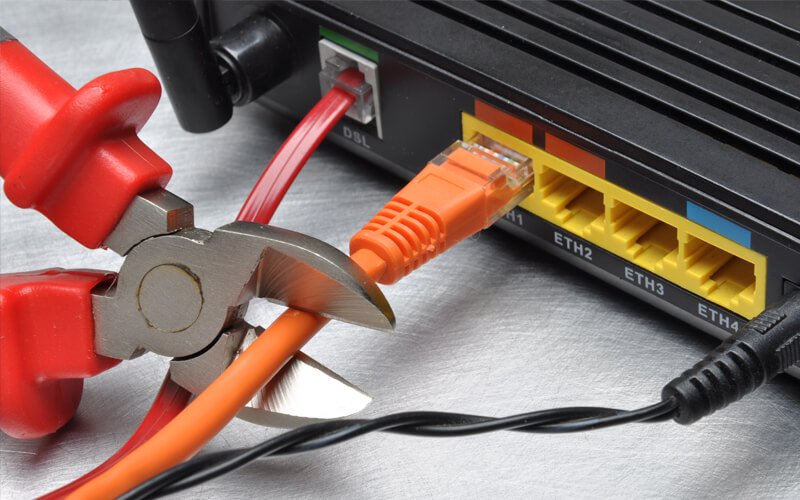
MediaTek, a Taiwanese fabless semiconductor company that provides chips for wireless communications, is currently showcasing two Wi-Fi 7 demos through its Wi-Fi 7 Filogic connectivity portfolio, which includes Wi-Fi chips. The demonstrations focus on the technology’s superfast speeds and low latency transmission. Wi-Fi 7 transfer speeds might make Ethernet cables obsolete. Currently, commonly-available wired Ethernet technology tops out at 10Gbps, so for current users of both Gigabit and 10 Gigabit Ethernet, Wi-Fi 7 might be able to replace the need for wired connections.
MediaTek’s demo shows how its Wi-Fi 7 Filogic technology can achieve the maximum speed defined by IEEE 802.11be. It can theoretically support bandwidth up to 30Gbps per access point, which is just over three times as fast as the maximum 9.6Gbps speed of Wi-Fi 6. The semiconductor company also wants to show off how well network traffic flows when there's interference or congestion by leveraging Wi-Fi 7's multi-link operation (MLO) capabilities, which use multiple frequency bands on different frequencies simultaneously.
MLO reduces latency by transmitting Wi-Fi on multiple bands at the same time, demonstrating how network traffic can still flow seamlessly even if there is interference or congestion. This means a Wi-Fi 7 router will be able to utilize all bands and channels available dynamically to speed up connections or avoid bands with high interference. MLO technology will be critical for delivering faster and more reliable video streaming, gaming and anything else that requires constant, sustained and real-time throughput.
The first products with Wi-Fi 7 are expected to hit the market starting in 2023. IEEE plans to publish the 802.11be amendment sometime in 2024 with full-scale commercial deployment occurring around the same time along with a certification program by the Wi-Fi Alliance to ensure interoperability.
Follow TTI, Inc. on LinkedIn for more news and market insights.
Statements of fact and opinions expressed in posts by contributors are the responsibility of the authors alone and do not imply an opinion of the officers or the representatives of TTI, Inc. or the TTI Family of Specialists.