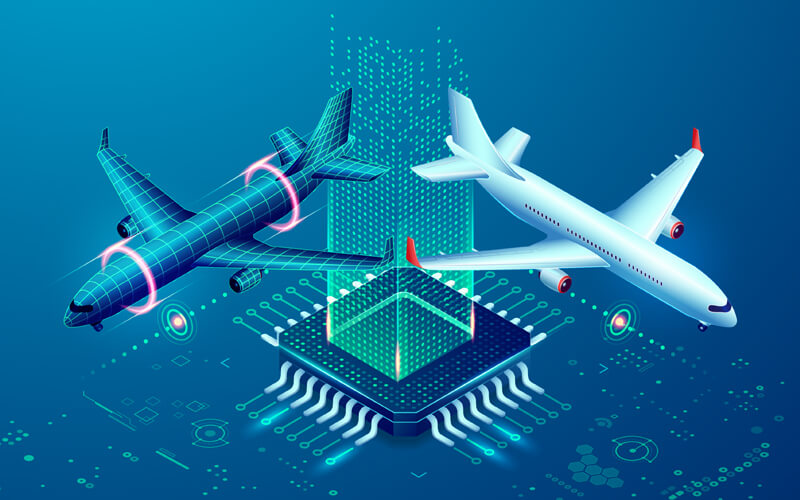
Digital twin technology, a critical Industry 4.0 driver, is helping manufacturers solve many traditional industrial problems. Through continuous ingestion of data from their physical counterparts (a product, process or component) and dynamic simulation of the real-world using machine learning algorithms, digital twins can help companies improve product design, optimize production and predict failures for better maintenance workflows. For example, in the oil and gas industry, digital twins process data installed in drills and rigs to identify specific problem areas. This helps to speed up repair and maintenance work on oil pipelines, rigs and deep-sea drills.
As warehousing sites become increasingly complex and expensive, companies can use the digital twin of their warehouse to simulate and test new warehouse operations and product movements. A McKinsey study found that companies worldwide spend an estimated $350 billion yearly on warehousing. Companies can reduce this cost by virtually evaluating technologies and applications before making any physical changes to the sites or investment decisions.
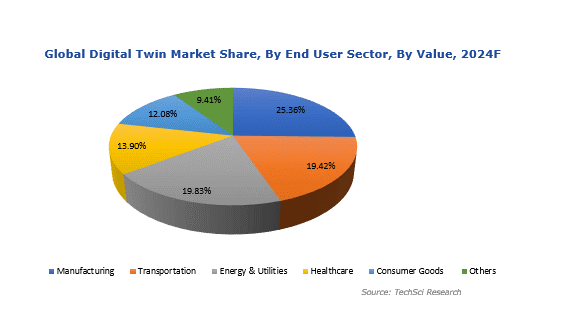
According to a Capgemini research study, digital twins helped companies improve critical sales and operational metrics by 15 percent and general system performance by 25 percent. As digital twin adoption continues to climb, the market size of this technology is poised to reach $86 billion by 2028.
Bridging the Physical and Virtual Worlds
In a typical IIoT deployment, sensors exchange information between assets and their digital twin while actuators convert signals into mechanical movements. A digital twin system includes hardware and software components and a data management middleware replicating its physical counterpart. The software components include AI-driven data modeling, simulation and analytics that convert raw data into business insights. The middleware platform handles network connectivity, data integration and processing, quality control and visualization. Digital twins perform the following iterative functions to bridge the physical and virtual worlds:
1. Continuously ingest IoT sensor data from a physical object
2. Analyze and prepare the data
3. Use the data from the physical object to mirror its virtual twin to test and analyze system performance by simulating environmental changes. Bottleneck and other system limitations are flagged at this stage. AI algorithms are applied to the virtual replica to spot unhealthy trends or determine if product design needs to be tweaked.
4. Visually present the system analytics via a dashboard to help operational teams to decide if there’s a need to change the parameters of the physical object or to modify the maintenance schedule to prevent costly downtimes, etc.
How Digital Twins Solve Industry Problems: Five Use Cases
Aviation Industry: Mission-Critical Predictive Maintenance
GE created a digital twin for the composite fan blades of its most popular GE90 engine, which has already surpassed 100 million flight hours. The engine’s fan blades are vulnerable to spallation or peeling off of their material due to the impact of rough conditions such as sand and winds in desert regions. GE’s digital twin pinpoints the right time for maintenance, thus reducing downtime.
Automotive Industry: Remote Diagnostics Using Vehicle Replicas
There is a discrete digital twin for every Tesla car hosted in the company’s cloud environment. Sensors embedded in the physical vehicle constantly stream environment and performance data to its virtual copy. AI algorithms analyze this data to identify anomalies in the car and determine if over-the-air software updates are necessary to fix the problems.
Manufacturing Industry: Improving Tire Life and Performance
Bridgestone’s R&D has used digital twins to improve its tire life and performance. A tire’s lifespan depends on load, speed, road conditions and driving behavior. By simulating various driving conditions, Bridgestone uses digital twins for insight into how these interrelated conditions affect tire performance. Digital twins enable the manufacturer to deliver insight across its value chain, from drivers and fleet managers to retailers and distributors, to offer services on a price-per-kilometer subscription model.
Power and Energy Industry: Predicting Gas Turbine Performance
Siemens developed a digital twin of its gas turbine and compressor business called ATOM (Agent-Based Turbine Operations and Maintenance) that digitally replicates its turbine fleet's production, servicing and supply chain operations. ATOM ingests sensor data to model engine parameters, performance metrics and maintenance operations across the entire turbine lifecycle. Simulating various what-if scenarios and visualizing the results generates insights for stakeholders to make better investment decisions.
Services Industry: Supply Chain Simulation for Better Visibility
Big Techs – Microsoft, IBM, Amazon and Google are offering new services to build digital twins of physical supply chains. It helps organizations in various industries aggregate information from multiple sources into one dashboard and provides customers with a holistic and clear view of their logistics.
Conclusion
Today, many platform-as-a-service (PaaS) providers offer digital twin solutions to accelerate the adoption cycle. Examples include IBM digital twin exchange, Azure Digital Twins, GE Digital Twin software and Oracle IoT Digital Twin Framework. While ready-to-use infrastructures, platforms and models can facilitate digital twin implementation, they won’t do all the work. To make this future of problem-solving a reality, you’d need experts in data science, machine learning and cloud technologies capable of integrating different parts of the hardware and software puzzles.
Sravani Bhattacharjee has worked as a tech leader at Cisco, Honeywell and other companies where she delivered many successful innovations to the market. As the principal of Irecamedia, she collaborates with Industrial IoT innovators to create compelling vision, strategy and content that drives awareness and business decisions.
Follow TTI, Inc. on LinkedIn for more news and market insights.
Statements of fact and opinions expressed in posts by contributors are the responsibility of the authors alone and do not imply an opinion of the officers or the representatives of TTI, Inc. or the TTI Family of Specialists.