
The productivity gains from Internet of Things (IoT) applications are undeniable. These gains are propelling the global IoT market to grow to a projected size of $650.5 billion by 2026. At this enormous scale, the digital load of analyzing IoT data from billions of connected devices exposes environmental consequences. Greenhouse effect and carbon emissions are most notable among those.
A study shows that the cumulative carbon footprint of electronic devices, the internet and the systems supporting them account for approximately 3.7 percent of global greenhouse emissions. Batteries running IoT devices, when replaced, add to toxic waste in landfills.
These environmental sustainability challenges have led to Green IoT.
What is Green IoT
Green IoT (GIoT) introduces energy-efficient processes involving IoT hardware, software, and services to reduce carbon emissions. The concept has two aspects to it.
Greening of IoT focuses on manufacturing energy-efficient IoT hardware and green software development. It refers to IoT as an enabler for a sustainable environment with smart technologies to optimize energy usage, material reuse and product recycling. Smart waste, smart cities and smart manufacturing are applications where IoT makes other industries greener.
Green IoT Lifecycle
A green IoT product must go through the process of green design, production, deployment and disposal/recycling.
In any IoT application, hardware, software and services are all part of the green design principles. Integrated circuit (IC) design plays a crucial role in energy conservation. Green design recommends integrating sensors and processing power on a single chip to minimize total infrastructure energy consumption, carbon footprint, traffic and e-waste.
Splitting the processor into two cores, reserving one core for low-computing tasks and the other for high-computing tasks and using a scheduling framework to assign tasks is another aspect of resource-efficient design to reduce carbon footprint.
Software design is a crucial aspect of environmental sustenance. The complexity of software algorithms and code design impacts computational costs and energy consumed in hardware.
Research shows that accurate training of AI models using massive IoT datasets requires exceptionally large computational resources. This increases the cost of hardware, energy consumption and cloud computing time, which subsequently affects the environment due to the carbon footprint needed to fuel modern tensor processing hardware.
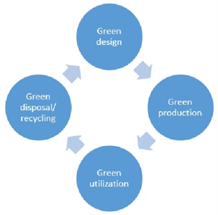
Figure 1: Green IoT lifecycle. Source: Figure 6 from Green Internet of Things (IoT): An overview | Semantic Scholar (semanticscholar.org
Green production involves implementing environment-friendly technologies and components for manufacturing IoT hardware and other associated subsystems. Another aspect of green production is optimizing software code and interdependencies for resource optimization.
Digital information and communication systems cause the emission of greenhouse gases like carbon dioxide, methane, ozone, and chlorofluorocarbons (CFCs), which lead to global warming. Green deployment and recycling prescribe best practices to reduce carbon emissions and greenhouse effects from how IoT products are deployed and disposed of at the end of the lifecycle.
Key Enablers of Green IoT
Green IoT depends on making the primary enablers of IoT technology, like cloud computing, data centers, etc., greener.
Green RFID
RFID tags are microchips extensively used in IoT applications to transmit/receive signals wirelessly. RFID tags are difficult to recycle as they use non-biodegradable material. That also makes it challenging to recycle the items they tag.
Green RFID uses less non-biodegradable material by reducing the size of the RFID tags. For example, Hitachi introduced μ-tags with dimensions of less than 0.4 mm2. Biodegradable RFID tags, printable tags and paper-based RFID tags are other green initiatives.
Green WSN
Wireless sensor networks (WSN) in IoT consist of sensor nodes and a base station (BS). The sensor nodes may have multiple onboard sensors to monitor temperature, humidity, acceleration, etc., in the intended environment.
Green WSN focuses on reducing relay nodes while including energy awareness among the communicating sensor nodes. Green WSN includes battery-free wireless solutions and energy harvesting mechanisms to generate power from environmental sources like solar, kinetic energy and temperature differential. Battery-free solutions have a considerable potential to reduce toxic waste resulting in environmental pollution.
Green Cloud Computing
IoT applications use cloud computing for analytics. Energy-efficient servers and software are the focus of green cloud computing. Green coding, low-code development and automated software quality monitoring are logical steps to minimize the energy consumption of software and the potential environmental impact.
Green M2M
Green M2M saves energy associated with communication between IoT devices by designing efficient communication protocols, scheduling device activity, intelligently adjusting the transmission power, etc.
Green Data Center
While scaling to large-scale IoT deployments, data centers are one of the biggest energy consumers resulting in high carbon emissions.
Nano datacenters are greener alternatives to conventional data centers as they have high service proximity, lower heat dissipation cost and self-adaptation or self-scalability capabilities. Resource virtualization in data centers and energy-efficient resource allocation are other green initiatives.
Companies are coming together to collaborate on greener hardware and software design development, forming platforms like the Green Software Foundation. Systems designers can use various tools and resources to monitor and optimize energy consumption.
The Road Ahead with Green IoT
Energy-efficient sensors, drones, machines and software are the future of IoT. In addition to enabling other industries, like manufacturing, construction, healthcare, etc., to protect the environment, Green IoT directly enables the IoT industry, paving the way to eco-friendly digital transformation.
Sravani Bhattacharjee has worked as a tech leader at Cisco, Honeywell and other companies where she delivered many successful innovations to the market. As the principal of Irecamedia, she collaborates with Industrial IoT innovators to create compelling vision, strategy and content that drives awareness and business decisions.
Follow TTI, Inc. on LinkedIn for more news and market insights.
Statements of fact and opinions expressed in posts by contributors are the responsibility of the authors alone and do not imply an opinion of the officers or the representatives of TTI, Inc. or the TTI Family of Specialists.