The Future of Industrial Automation
The development of Industry 4.0 technologies has accelerated at a rapid pace. There is cause for optimism that the future of industrial automation will be scalable, open and integrated. Explore some of the top trends destined to impact machine builders and plant operations.
Distributed Control
Most industrial automation systems today utilize centralized control strategies with the PLC (programmable logic controller) at the core. PLC-centric solutions provide limited remote access, no security or machine-to-machine (M2M) communication and separated safety control. In a Master-Slave system, autonomous devices can hardly coexist, as all the inputs/outputs from sensors or to actuators must be wired to/from a PLC directly or through some active or passive devices. (Figure 1.)

Figure 1: Today’s industrial automation system block diagram. (Source Molex)
The next phase for the industry will move away from centralized, top-down control in favor of distributed control architectures with embedded safety and security. Distributed control effectively moves safety, processing and intelligence closer to the point of need and allows dynamic real-time processing. A higher level of intelligence per device eliminates the need for costly central controllers by distributing logic among devices. Distributed control, with real-time machine-to-machine (M2M) communications and connectivity to enterprise applications, will drive a paradigm shift in the centralized and hierarchical industrial automation world.
Converging Fieldbus Technologies
Increasingly, plants will replace conventional Fieldbus networks with Ethernet based Fieldbus networks to leverage the benefits of Ethernet at field level. Ethernet based Fieldbus technologies deliver reliability and accessibility at an attractive price point. Facilitating rapid, secure and accurate dataflow, these Fieldbus technologies provide shared communication on a single local area network, with access to the Internet. A network can incorporate wired and wireless connectivity for improved transparency, closer monitoring and control over production, resource management, and streamlined operations.
Open Protocols
Dynamic automation requires open and interoperable networks. Machine builders and manufacturers must not be locked into proprietary/semi-open solutions in the future. Within an open Industry 4.0 ecosystem all devices are interconnected with no protocol restrictions. Open architectures will give machine builders and their customers the freedom to customize and use the latest technologies, and more easily add or decommission devices within the ecosystem.
Path to Industry 4.0
Industry 4.0 is not a revolution in the true sense of the word. Industrial automation changes one machine at a time. Technologies exist to support open and powerful distributed networks with modular machine-based control and logic, without having to replace all conveyors or machines on a line.
The Molex Industrial Automation Solution 4.0 (IAS4.0) provides an open architecture designed for distributed control and orchestration of devices from sensor to machines to enterprise to cloud applications. (Figure 2.) The integrated IAS4.0 platform was developed to address the need for a modular, building block approach. A machine builder or end user can connect one or more devices and ramp up at the pace and scale they choose.
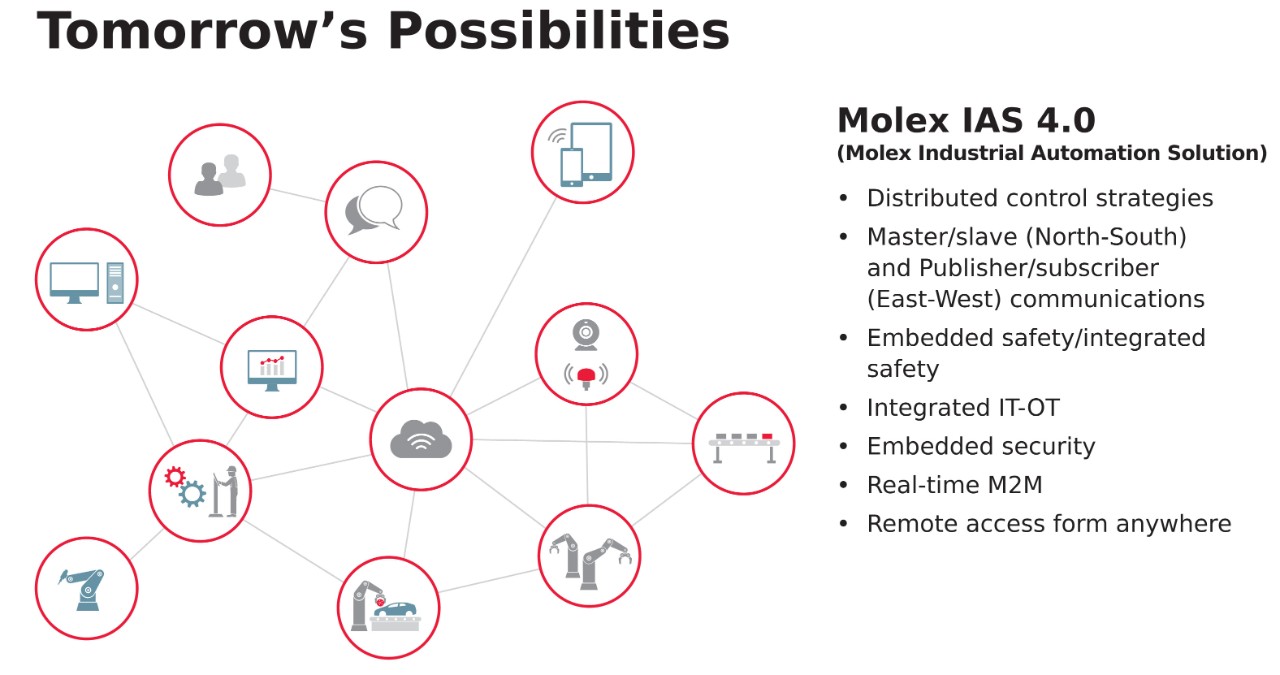
Figure 2: Molex Industrial Automation Solution 4.0. (Source: Molex)
An end-to-end platform, IAS4.0 can be used to serve simple to highly complex machines and robots, as well as controllers, gateways and IO modules as well as platforms to develop cloud-based applications. The protocol agnostic core allows real-time M2M communications regardless of the existing legacy protocol.


Featured Suppliers