Panasonic LF-G Series Non-Polarized Power Relays feature contact GAPs of 1.5mm/1.8mm and comply with photovoltaic standards (IEC62109 and VDE0126) and the coil holding voltage helps in saving energy for equipment. These power relays offer high-capacity control up to 22A/33A with a compact size and a 250V AC rating and conform to various safety standards including UL/C-UL and VDE. The LF-G power relays find applications across a wide range of industries including consumer electronics, automotive, telecommunications, and industrial automation.
Panasonic LF-G Series Non-Polarized Power Relays
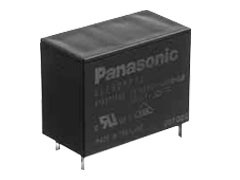
Features
- Coil-holding voltage contributes to energy savings for equipment
- Compact size with 250V AC rating
- Compliance with photovoltaic standards (IEC62109 and VDE0126)
- Conforms to various safety standards: UL/C-UL and VDE
- Contact GAP options: 1.5mm/1.8mm
- High capacity control possible at 22A/33A (high capacity type)
Applications
- Battery charge/discharge systems
- Microwave ovens
- Smart grid equipment
- Uninterruptible Power Supply (UPS)
Video
This TTI Tech Specs video for Panasonic Non-Polarized Power Relay (LF-G series) explains the LF-G series are non-polarized 1 Form A power relays that can switch up to 33A at 250V AC. They’re offered with a 1.5mm or 1.8mm contact gap and comply with photovoltaic standards, making them ideal for AC line switching in solar applications as well as UPSs, microwave ovens, and battery charge and discharge systems.
See video transcript below
Video Transcript
The other day I found some new relays that I had to tweet about, but there was some confusion as apparently most people use hashtag LF-G for something besides relays. In any case, Panasonic’s LF-G relays are worth tweets with all kinds of hashtags. The LF-G series are non-polarized 1 Form A power relays that can switch up to 33A at 250V AC. They’re offered with a 1.5mm or 1.8mm contact gap and comply with photovoltaic standards, making them ideal for AC line switching in solar applications as well as UPSs, microwave ovens, and battery charge and discharge systems.
To save energy, designers can reduce the coil holding voltage by 35%, dropping the operating power to 170mW. The relays have a compact size that allows for smaller, higher density designs, and they feature excellent creepage, clearance, and breakdown voltage to ensure safe operation.