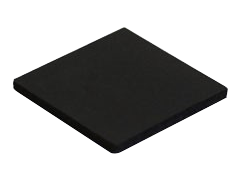
Panasonic EYG-T Series Graphite PADs are Thermal Interface Materials (TIM) that have superior flexibility and excellent thermal conductivity in the Z-axis thickness direction. The graphite PADs are composed of Pyrolytic Graphite Sheets (PGS) fillers and silicone resin, which allows for higher thermal management reliability and heat dissipation. These graphite PADs are RoHS-compliant and find application in general-purpose inverters, medical equipment, and the automotive industry.
Panasonic EGY-T Series Graphite PADs
Features
- Available in 140mm x 140mm and 150mm x 150mm sizes
- Excellent compressibility
- Flexible
- High relaibility
- RoHS complaint
Applications
- Base station, IGBT module
- Car-mounted camera, motor control unit, automotive lighting (LED), car navigation
- General-purpose inverter, medical equipment, and DSC
Video
This TTI Tech Specs video for Panasonic Graphite PADs EYG-T Series explains Panasonic’s EYG-T series Graphite-PADs uses vertically oriented Pyrolytic Graphite Sheets in a silicone resin and provides excellent thermal and mechanical properties. The combination of materials results in high z-axis thermal conductivity, while the silicone resin provides tackiness on both sides of the sheet to hold it to surfaces or components for efficient thermal transfer.
See video transcript below
VIdeo Transcript
If there’s one thing engineers appreciate more than a plaid shirt, it’s a great thermal interface material. Panasonic’s EYG-T series Graphite-PAD uses vertically oriented Pyrolytic Graphite Sheets in a silicone resin and provides excellent thermal and mechanical properties. The combination of materials results in high z-axis thermal conductivity, while the silicone resin provides tackiness on both sides of the sheet to hold it to surfaces or components for efficient thermal transfer.
The construction also provides excellent flexibility, with the sheets able to be bent or used on curved surfaces. Panasonic EYG-T series Graphite PADs are offered with thickness ranging from 0.5 to 3.0 millimeters and can be compressed by nearly 60%, supporting large mechanical tolerances. They’re ideal for use in applications such as inverters, medical equipment, automotive electronics, base stations, and other high power devices.