In a recent report, TrendForce estimated that the automotive LED market would total $2.93 billion in 2021, a 13.7 percent increase over the previous year – and a level of growth that would make automotive the fastest growing sector of all LED applications.
It’s unsurprising that automakers are choosing LED technology whenever and wherever possible, given these components’ lower power consumption and resulting lower heat dissipation than traditional lighting solutions.
In addition, surface-mount LEDs are smaller than their leaded counterparts, making them ideal for space-limited applications. They are also highly resistant to shock and vibration and are available in a variety of packages. With proper thermal management, today’s LEDs deliver higher efficiency than other lighting or display solutions.
Today, we’re seeing vehicle manufacturers moving beyond simple, straightforward interior lighting to more complex user experiences that utilize color-changing RGB LEDs. Drivers can now create custom lighting themes for a particular mood or ambience.
Dashboard clusters are also being reinvented with brilliant LED colors and color-changing capability, which not only allows for customization but gives drivers a higher contrast option for improved visibility.
We’ve also seen improvements in the quality of white LED light, as measured by the Color Rendering Index (CRI). This is the measure of how colors appear to the eye versus their appearance in sunlight. Today’s white LEDs give better quality light for spotlights, interior reading lamps, makeup mirror lights and side mirror ground projection.
Additionally, automakers are using high-reliability backlight LEDs for door locks, window controls and lighting for foot-rest areas.
The next evolution of driver-assistance and information technology will see current infotainment and instrument clusters being augmented by heads-up displays, which make use of high-power LEDs and lasers to project critical info to the driver.
While heads-up display technology has been around for decades, and found in high-end models by Bentley, Audi, BMW and others, this feature can be found in 2021 models from Buick and Chevrolet with expectations that it will become a more widely-offered option in the years ahead.
As for vehicle instrument clusters and infotainment screens, TFT technology will remain the norm for the foreseeable future, although OLED displays may challenge in the future once lifecycle and cost factors have been addressed.
Beyond lighting and infotainment, optoelectronic components are also delivering increased safety. Infrared sensors are used to detect vehicle occupancy for safety and security. They can also track drivers’ movements and sound an alert, or take other action, if they sense a driver is fatigued or falling asleep at the wheel.
Multiple other sensors are now being built into interior cabins for a range of passenger safety and comfort features, from ambient light detection, to cabin temperature, to air quality and sound/noise levels.
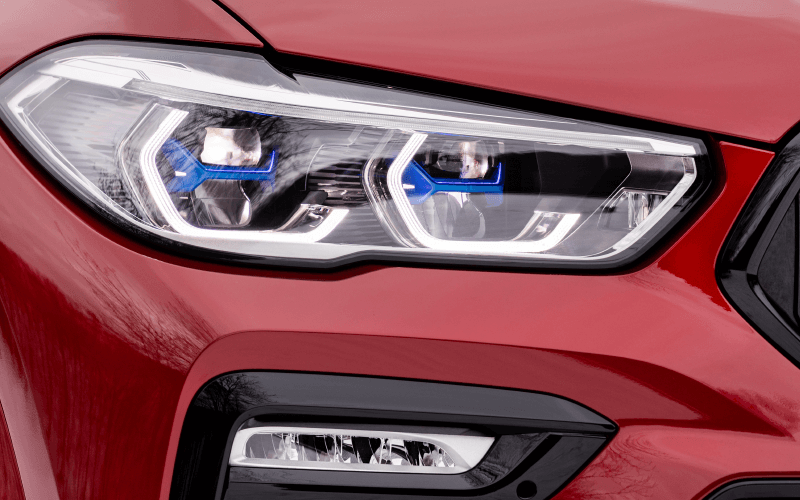
Finally, the most visible lighting components on an automobile – its headlights – are being reinvented with high-power LEDs and lasers that deliver superior light quality and critical beam control, increasing safety and visibility even in bad weather.
These are times of rapid change in the passenger vehicle space, and suppliers of LEDs and optoelectronic components are helping automakers stay on top of evolving trends and new customer features. While the current challenges faced by manufacturers are having a serious impact on the industry, we don’t expect those changes to impact the course of innovation in lighting and sensing applications.
A version of this article appeared in the August 2021 issue of Electronics Sourcing North America.
Follow TTI, Inc. on LinkedIn for more news and market insights.