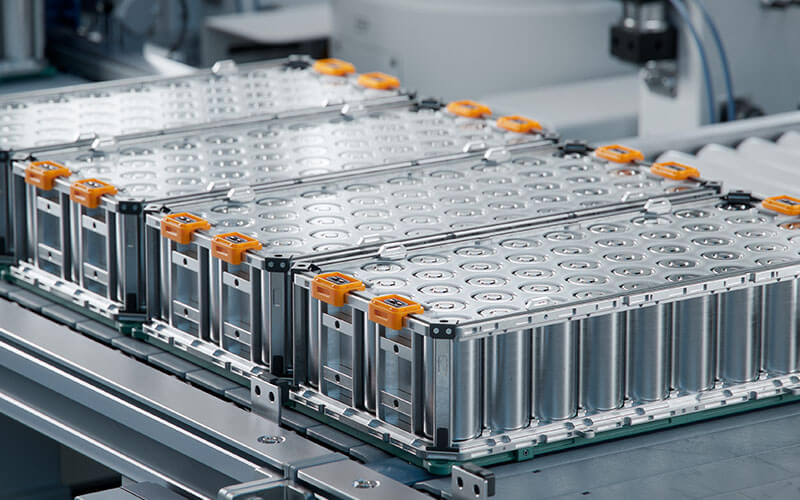
Electrostatic capacitors provide energy storage and power for devices ranging from smartphones to medical devices and automotive electronics. Unlike batteries, which can store energy for a long period but take a long time to charge and discharge, capacitors store electricity in an electric field that can be quickly charged and discharged. Electrostatic capacitors are key components of advanced electronics and high-power electrical systems owing to this fast charging-discharging capability. Around 1,000 capacitors can be found in a mobile device.
Some capacitors use ferroelectric materials to store energy. These materials are naturally polarized, which can be reversed by applying a voltage. When the polarization is reversed, this ferroelectric memory operates in the same manner as the ferroelectric RAM (FRAM) now embedded in some products, even after the voltage is removed.
On the other hand, the ferroelectric dielectric materials used in these ceramic capacitors can have significant energy loss, also due to their material properties, making it difficult to provide high energy storage capability.
Nonetheless, innovation in capacitor development is booming. This innovation is fueled by a need for efficient, high-performance materials for electrical energy storage that has continued to grow in parallel with an ever-increasing demand for energy in mobile and automotive applications.
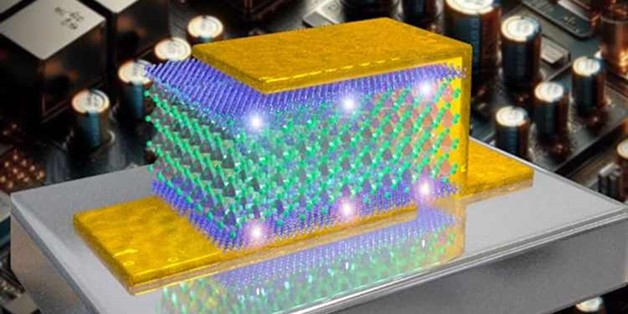
Figure 1: Artificial heterostructures developed by Sang-Hoon Bae’s lab have an energy density up to 19 times higher than commercially available capacitors. (Source: Bae Lab McKelvey School of Engineering, Washington University, St. Louis)
Here’s one example: Sang-Hoon Bae, a researcher at McKelvey School of Engineering at Washington University in St. Louis and collaborators, Rohan Mishra, associate professor of mechanical engineering and materials science, and Chuan Wang, associate professor of electrical and systems engineering, both at Washington University, along with Frances Ross, the TDK Professor in Materials Science and Engineering at MIT, designed a dielectric heterostructure with barium titanate sandwiched between a two-dimensional material. Charge accumulation at the material interfaces under an alternating electric field changes the relaxation time of the heterostructure. Relaxation time is an internal material property that describes how long it takes for charge to dissipate or decay ferroelectric capacitors using 2D materials. The structure employs molybdenum disulfide and barium titanate.
Based heterostructures (BaTiO) promise to transform energy storage by enabling the capacitors in electric vehicles or devices to store energy for much longer due to material properties optimal for high-density energy storage capacitors with a durable ultrafast charging structure. According to the researchers, capacitors developed from these heterostructures can reduce the speed at which energy dissipates without affecting their ability to charge quickly.
A heterostructure is a semiconductor structure in which the chemical composition changes with position. The simplest heterostructure consists of an interface within a semiconductor crystal across which the chemical composition changes.
The scientists described their findings April 18 in the journal, Science (Vol 384, Issue 6693, pp. 312-317).
The novel 2D/3D/2D heterostructures minimize energy loss while preserving the advantageous material properties of ferroelectric 3D materials.
High energy density is achieved through relaxation time modulation. Dielectric relaxation refers to the relaxation response of a dielectric medium to an external, oscillating electric field, an internal material property that describes how long it takes for charge to dissipate or decay. The researchers found that dielectric relaxation time can be modulated or induced by a very small gap in the material structure. Precise control over relaxation time holds promise for a wide array of applications and has the potential to accelerate the development of efficient energy storage systems.
Polarization relaxation fundamentally determines the speed, energy consumption and functionality of ferroelectric materials and devices, which is considered as the core aspect of ferroelectric-based applications.
This, in turn, can substantially reduce the energy loss when the right materials are chosen. The authors produced one such structure with high energy density and low loss using two-layer molybdenum disulfide and barium titanate.
High remnant polarization has hindered effective deployment of ferroelectric materials in energy storage applications because of the deteriorated crystallinity of the ferroelectric materials. Here the authors introduced a new approach to control the relaxation time using two-dimensional materials while minimizing energy loss by using 2D/3D/2D heterostructures and preserving the crystallinity of ferroelectric 3D materials with carefully engineered chemical and nonchemical bonds between each layer.
Using this approach, they were able to achieve an energy density of 191.7 joules per cubic centimeter with efficiency said to be greater than 90%.
This novel heterostructure material could pave the way for high-performance electronic devices, encompassing high-power electronics, high-frequency wireless communication systems and integrated circuit chips. These advancements are particularly crucial in sectors requiring robust power management solutions, such as electric vehicles and other developing green technologies.
To be employed broadly in electronics, the next steps will be to make this material structure better, thus meeting the need for ultrafast charging and discharging and very high energy densities without losing storage capacity over repeated charges.
Follow TTI, Inc. on LinkedIn for more news and market insights.
Statements of fact and opinions expressed in posts by contributors are the responsibility of the authors alone and do not imply an opinion of the officers or the representatives of TTI, Inc. or the TTI Family of Specialists.