Modern Defense Applications Need a New Breed of Component Supplier
By Wendy Preston, Senior Technical Author, Harwin
Bidding for defense contracts can be a very tricky business, with the companies involved facing a variety of different challenges. These can be of a technical, commercial or organizational nature. Contractors must be able to deal with the securing of compliance to the relevant standards and, when supplying to certain countries, be aware of the related government initiatives or key legislative measures that are in place (such as LPTA and ITAR). They also need to have the capacity to rapidly specify and source the required technology so that they can meet the performance criteria outlined by the customer as well as being flexible enough to carry out design alterations if the envisaged requirements suddenly change. Simultaneously, they have to keep their pricing as competitive as possible given the fact that defense budgets are expected to go a lot further now than in the past.
The defense landscape has been transformed considerably over the course of the last decade and a large proportion of contractors are now relatively small in terms of their workforce, with only limited engineering resources directly at their disposal. Yet the time periods they are allocated in which to complete projects are being shortened. All this is putting pressure back onto the component suppliers that serve this sector to offer more. They need to develop products that deliver better performance and cost-effectiveness, while still maintaining the robustness mandated by military applications. Suppliers may also be required to provide greater engineering support to back this up. All this is driving technological advances, and encouraging new innovative approaches to be taken.

Fig 1. Electronics incorporated into military UAVs should be robust, space-saving and as lightweight as possible
In many cases, the constituent components for military systems need to be available off-the-shelf, at price points that reflect the increasing constraints being placed upon military spend. There must, however, also be sufficient scope to offer services that stretch beyond this if custom designed components or subsystems are required. Furthermore, the capacity has to be there for these items to be turned around in a short timeframe, without too hefty a financial outlay being called for (either in terms of upfront NRE investments or the actual unit costs).
Key military applications and their impact on electronics design
In recent years, we have seen more widespread proliferation of unmanned aerial vehicles (UAVs). These can be employed for reconnaissance missions, transportation of equipment and supplies, plus a multitude of other purposes, without putting personnel into dangerous situations. UAVs may be required to carry heavy payloads and travel over long distances. As a result, much like it is for any form of aerial hardware, the electronics incorporated into these units, along with the cabling that accompanies it, should take up minimal space and not make the overall design too heavy. The same basic dynamics apply to unmanned ground vehicles (UGVs) too, as they have to utilise their fuel reserves to the fullest. Likewise, the amount of electronic circuitry being incorporated in soldiers’ kit is mounting up dramatically, with a variety of different sensors, wireless communication modules, etc., all now being fitted.
With reductions in size, weight and power (SWaP) now being an essential aspect of military design at the system level, major changes need to be made down at the component level. Assuring transportation of acquired data through the systems previously detailed is paramount. This can manifest itself in the form of image content captured by the cameras on UAVs for surveillance tasks, or biometric information generated by soldiers’ body-worn monitors that needs to be processed/analyzed on a continuous basis. Alongside this critical data, power has to be carried through these systems. In both circumstances, military-grade connectors will need to be specified – delivering a combination of strong performance characteristics and prolonged operational reliability. They must be suitable for deployment in uncompromising environments and have the potential to execute large numbers of mating cycles.
As a consequence of the dynamics associated with SWaP, compact and lightweight connectors are now being sought. In addition to taking up minimal board space (so that there is enough room for other electronic components, energy storage units and cables) and not having a significant bearing on the overall mass of the system, these connectors must exhibit the requisite resilience to the effects of impact, vibration, hazardous corrosion media, etc. The power levels and data rates that need to be dealt with are also ramping up to enhance system performance, while package formats are being scaled down. The density of the cabling that comes with these components is rising all the time (in response to the space restrictions now being witnessed), and this brings problems with regard to EMI.
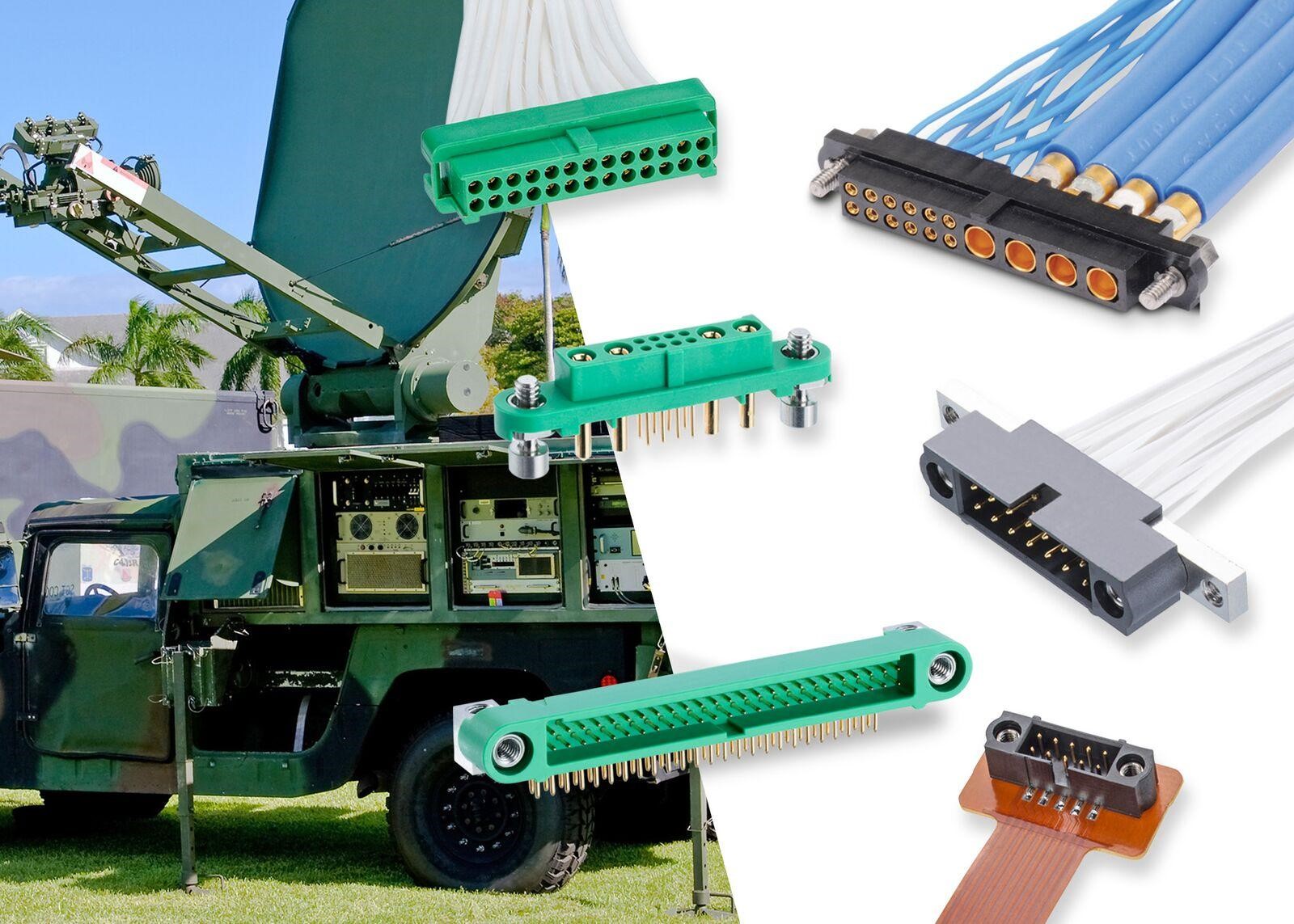
Fig 2. Hi-Rel connectors from Harwin optimized for military applications
Military contractors need to be in a position to engage with experienced connector suppliers that have an innate understanding of all these factors. The high reliability multi-functional connector products available from Harwin meet the exacting expectations now being set by modern defence applications. The company’s Datamate and Gecko solutions have seen widespread deployment in relation to front-line marine vessels, land vehicles, UAVs and manned military aircraft. Both these connector families rely on a patented multi-finger contact arrangement that maintains continuous electrical connectivity even when subject to high levels of shock or vibrational force.
The small form factor housings of the Gecko family allow marked space savings to be realized and their plastic shells make them extremely light. These slim-line 1.25mm pitch components accommodate a far larger number of contacts than competing connectors of equivalent (or even greater) dimensions. Screw-lock versions are available that can cope with elevated levels of vibration, and metal backshell versions that have cable-braid attachments help to address EMI issues, as well as safeguarding against the threat of jamming/interference. Eliminating the need for separate power and data connectors, the Datamate family is capable of delivering mixed-technology options that can carry up to 40A of current on their contacts. The use of Beryllium Copper to create the contacts enables them to cope with an extended temperature range of -55°C to 125°C.
Harwin has EN 9100 accreditation, which means that it complies with the highest quality standards stipulated by all branches of the aviation sector – for both military and civilian aircraft. Thanks to the cable assembly service that the company also offers, military contractors can outsource this difficult element of the production process (which requires substantial expertise) without accruing any NRE outlay for tooling or having to commit to orders above a certain threshold of units. This means they can have prototypes produced and then finalise the design concept before moving to full-scale production.
As progress continues within the military sector, rugged interconnect solutions will need to be sourced that support the SWaP characteristics previously discussed. At the same time, they should come from a dependable supply chain where there is no risk of hold ups. These connectors must also be competitively priced without any performance trade-offs needing to be made.


Featured Suppliers