Diagram Of A Potentiometer
What Is A Potentiometer & How Does It Work?
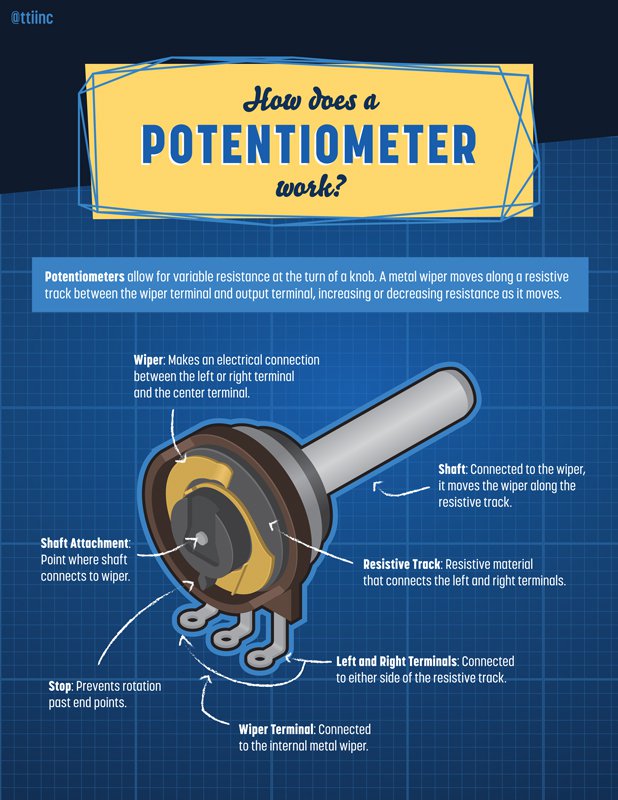
Potentiometers Potentiometers are used to change resistance in a circuit by turning the connected knob. The main components of the potentiometer are:
- Wiper
- Shaft
- Resistive Track
- Left and Right Terminals
- Wiper Terminal
- Stop
- Shaft Attachment
Each component works in tandem with another for the potentiometer to function properly. As the user turns the knob, connected to the shaft attachment, the wiper moves along the resistive track between the wiper terminal and the left and right terminals, increasing or decreasing resistance as it moves. The wiper makes an electrical connection between the left or right terminal and the center terminal. Both the shaft and the wiper terminal are connected to the wiper and work in conjunction with the wiper. The wiper terminal works to increase or decrease resistance with the wiper while the shaft moves the wiper along the resistive track. The resistive track contains resistive material that connects the left and right terminals to either side of the resistive track. The stop prevents rotation past the end points.